
Highlights#
- Comprehensive meta-analysis of risk assessment tools used specifically at the policing stage, covering 29 studies and 256,125 participants
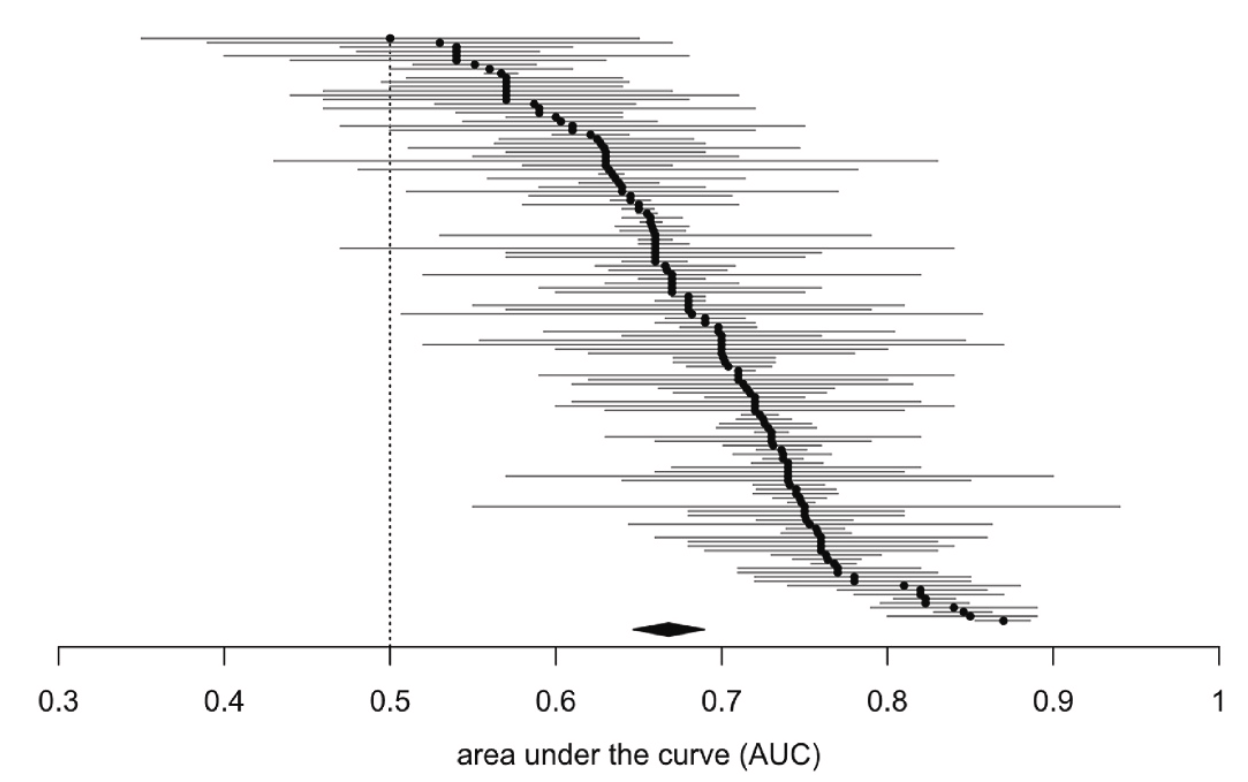
- Overall predictive performance is poor to moderate (pooled AUC = 0.67), with IPV tools performing worst (AUC = 0.64)
- Significant authorship bias detected: Studies led by tool developers reported notably higher performance than independent replications
Summary#
Risk assessment tools are increasingly used by police officers to inform high-stakes decisions, from detaining individuals to safeguarding potential victims, yet the evidence base supporting their use has never been comprehensively evaluated at the policing stage. We conducted the first systematic review and meta-analysis of such tools, identifying 29 studies representing over 256,000 individuals across nine countries. Across 28 different tools and 134 effect sizes, we found an overall pooled AUC of 0.67, reflecting poor to moderate predictive performance.
Tools targeting intimate partner violence performed worst, with a pooled AUC of just 0.64. Actuarial tools outperformed structured professional judgement approaches, and health-related outcome tools showed the strongest performance, though based on limited evidence. Critically, we found significant authorship bias: independent validations yielded substantially lower AUCs than studies conducted by the original tool developers. Calibration data were almost entirely absent from the literature, undermining confidence in the reliability of risk estimates in practice.
While some newer, large-scale tools demonstrate stronger performance and more transparent reporting, the evidence does not currently support the routine use of most existing tools at the policing stage. We therefore call for the development and independent validation of higher quality tools alongside robust implementation frameworks, to support more consistent and evidence-based decision-making in police settings.
Publication:#
Ryland, H.*, Burghart, M.*, Zhong, S., Fazel, S., & Yu, R. (2025). Risk assessment tools used at the policing stage for health and crime outcomes: A systematic review and meta-analysis. Social Science & Medicine, 383, 118457. https://doi.org/10.1016/j.socscimed.2025.118457